Field
Body
The animal you inhabit, and what it is quietly doing.
21 entries
The blood in your veins is not blue
Venous blood is dark red. Veins look blue through the skin because of how tissue scatters light, not because the blood changed colour.
You are taller before breakfast
Most adults lose about a centimetre of height between morning and night, as the spinal discs compress, and regain it lying down.
Half your bones are in the hands and feet
A typical adult skeleton has 206 bones. Fifty-four are in the hands and fifty-two in the feet, just over half the total.
The stomach is a vat of acid
Resting gastric juice has a pH around 1.5 to 3.5, in the range of battery acid, strong enough to denature protein.
The liver grows back
After a large part of a healthy liver is removed, the remnant regrows toward the original mass.
You are not outnumbered ten to one
Bacterial cells in the body and human cells are in the same order of magnitude. The famous ten-to-one ratio was an overestimate.
You can see your own blood cells
Against a clear blue sky, many people see tiny bright dots darting on short paths. Those are white blood cells moving through capillaries in the retina.
A baby has more bones than an adult
A newborn skeleton has on the order of 300 bony elements. Many fuse, so a typical adult has 206.
Adults still have a furnace of brown fat
Adult humans keep deposits of brown adipose tissue that burn fuel to make heat when the body is cold.
Most of your serotonin is not in your brain
About ninety percent of the body's serotonin is made in the gut, largely by enterochromaffin cells.
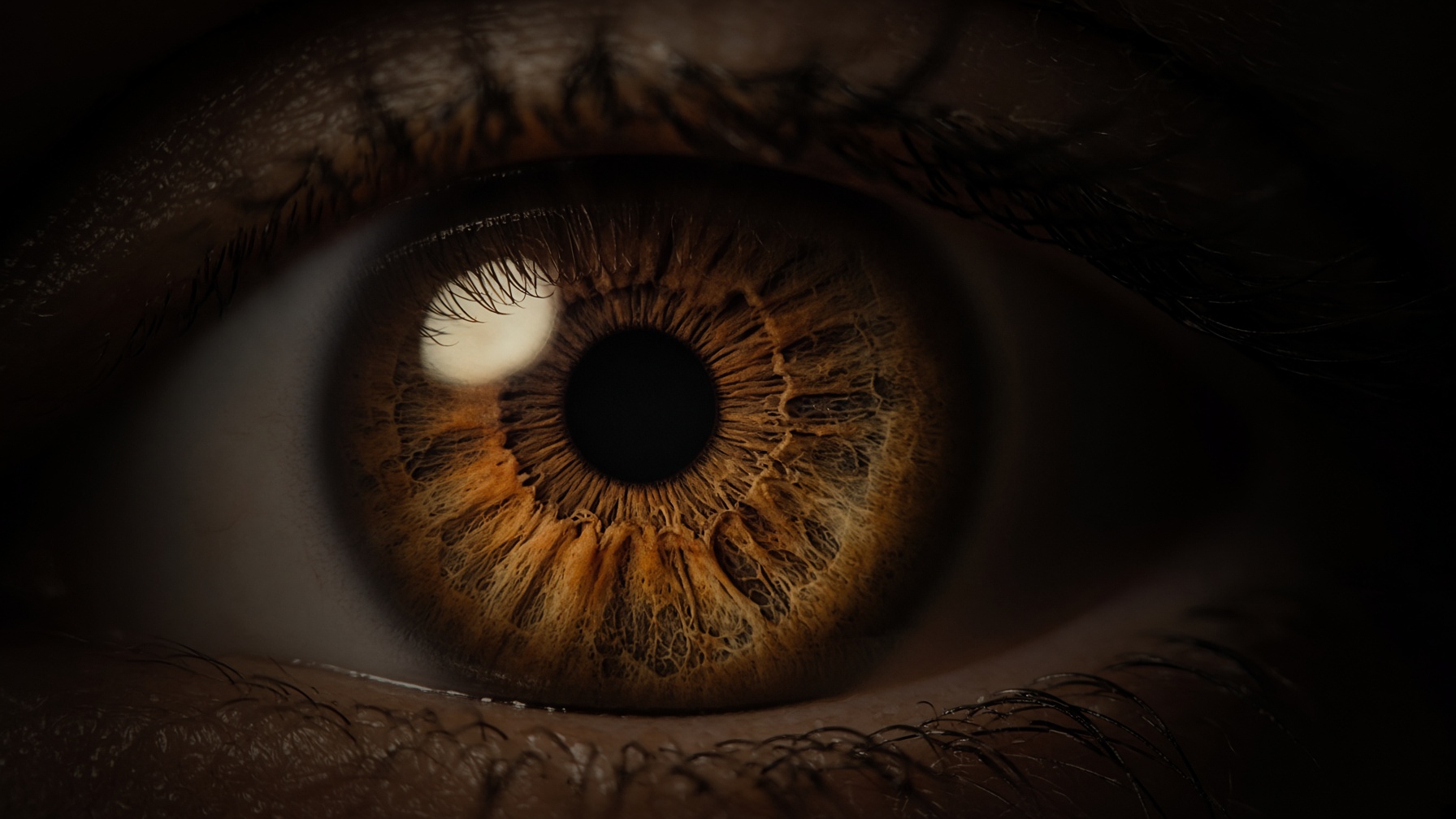
The window of the eye has no blood
The cornea has no blood vessels. It takes much of its oxygen from the air, through the tear film.
A human egg can be seen without a microscope
A human oocyte is about a tenth of a millimetre across, just large enough to see as a speck in good light.
The marrow replaces the blood without pause
A typical adult produces on the order of two million red blood cells every second to replace those that are retired.
Flavour is mostly smell
What is called flavour is largely retronasal smell — odorants from the mouth reaching the nose — together with taste, touch, and temperature.
The heart beats without orders from the brain
The impulse that starts each heartbeat is made in the muscle itself, in the sinoatrial node. Nerves can speed it or slow it. They do not originate it.
The stomach replaces its lining every few days
The surface cells of the stomach turn over in a few days. The acid and the enzymes would digest the organ if the lining were a permanent structure.
The gut has as many neurons as the spinal cord
A careful count puts about 170 million neurons in the human enteric nervous system, on the same scale as the spinal cord. The gut can coordinate digestion without instructions from the brain.
The brain itself cannot feel the surgeon
The cerebral cortex has no pain receptors. Surgery on it can be done with the patient awake, speaking, while the scalp and the lining around the brain are the parts that hurt.
A salamander grows the limb back, bones and all
An axolotl that loses a leg regrows the leg: skeleton, muscle, nerves, and skin, in the right pattern, without a scar. The cells at the stump remember what tissue they were.
The nerve to your voice box loops down through the chest
The recurrent laryngeal nerve leaves the skull, descends into the chest, passes under a vessel by the heart, and climbs back to the larynx. In a giraffe the same detour is a path of metres, to reach a target a few centimetres from where the detour began.
Two bones of your middle ear used to be part of the jaw
The malleus and the incus, which pass sound across the middle ear, are the articular and the quadrate, the jaw joint of a reptile. Mammals bite with a different pair of bones. The old pair was free to hear.